Fit the machine to the path
The decision starts with the route from unloading to the task:
- Narrowest doorway and corridor width along the path.
- Elevator cab size and weight limits if the lift must change floors.
- Floor load rating and surface sensitivity in lab and manufacturing areas.
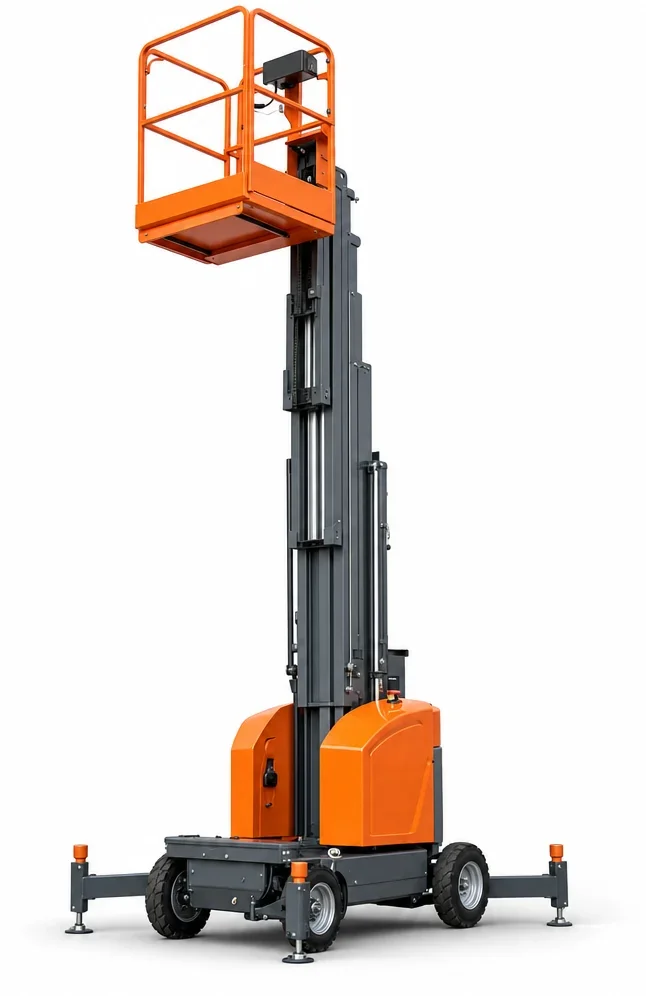
Vertical masts offer small footprints and non‑marking tires suited to coated slabs and finished spaces.
Task geometry in controlled environments
Ceiling diffusers, cable trays, and instrument clusters crowd the approach. A vertical mast’s compact base and precise up‑down motion reduce near‑miss contact. Some models provide small outreach or jib functions for offset fixtures, but the primary advantage is stability in a small aisle.
When winter changes the plan
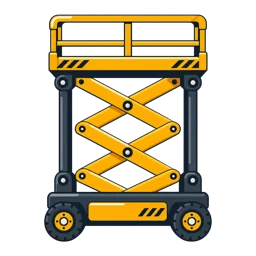
For exterior work or transitions across icy docks, a scissor or boom with rough‑terrain features may travel more reliably. Keep the mast lift for the final indoor task while using other equipment for outdoor moves between buildings.
Measurements that narrow the model
- Platform height vs. ceiling service point, allowing room for tools and fixtures.
- Stowed height relative to door headers and low pipes.
- Overall width and turning radius for equipment aisles.
- Power type: electric dominates in sensitive interiors.
Related categories for Madison projects
- /electric-scissor-lift-rental/ for broader platforms at similar heights
- /articulating-boom-lift-rental/ when up‑and‑over is required
- /generators-light-towers-rental/ for planned shutdowns and after‑hours service
Actual site conditions and the selected unit’s documentation determine permissible use and limits at height.