Define the route before the platform
Electric scissor lifts succeed indoors when the path is predictable. Measure door widths, elevator cabs, and pinch points. Many Madison facilities have long corridors with tight turns; a small chassis width and short wheelbase reduce staging time.
Key indoor constraints: - Corridor and doorway width vs. machine width - Elevator capacity vs. machine weight - Floor finish and tolerance for tire marking - Overhead obstructions like duct drops and cable trays
Why local interiors steer the spec
High‑tech and lab‑adjacent spaces value clean operation. Electric drives limit fumes and particulates, and non‑marking tires protect sealed floors. In winter, interior maintenance intensifies while outdoor areas ice over, so planning for continuous indoor uptime and charging access becomes more important.
Platform size vs. reach
Scissor lifts go straight up. If the platform can sit beneath the task, a wider deck helps with tools and two‑person work. If equipment, benches, or guardrails block a straight‑under approach, consider a vertical mast for very tight spots or a small articulating boom for up‑and‑over reach under /aerial-lift-rental/.
Common electric scissor choices
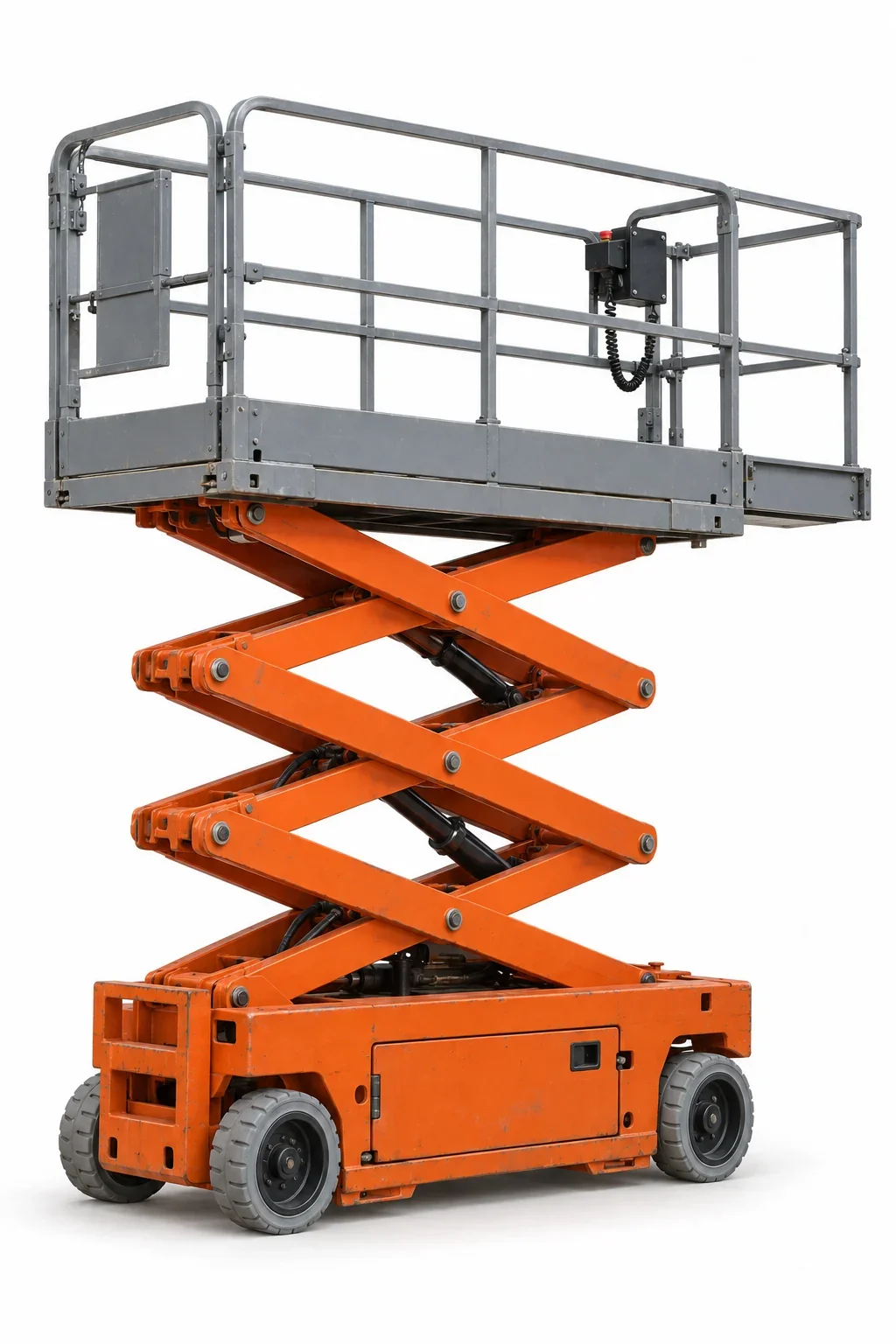
- Micro and compact slab scissors: Fit standard doors and many elevators; ideal for inventory work and light facility tasks.
- Standard slab scissors: More deck space and working height; verify floor load and turn space at corners.
When to look beyond a scissor
If you must reach over lab equipment or around mezzanines, the vertical path of a scissor may not work. Compare alternatives at /aerial-lift-rental/ and /boom-lift-rental/ for outreach solutions.
For planning support in Madison, WI, call (608) 719-3782.