Ground conditions shape the choice
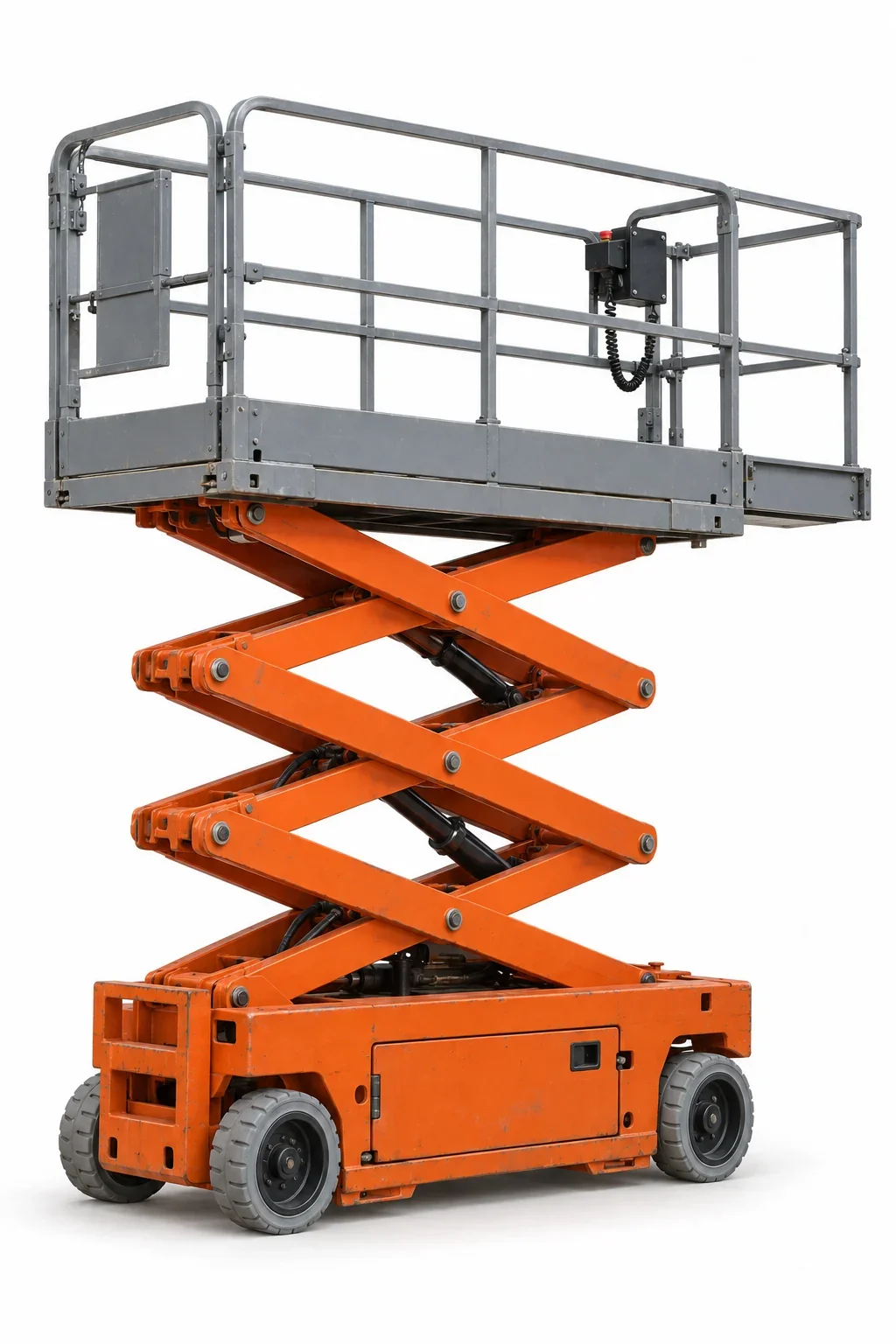
Rough‑terrain scissors provide higher ground clearance and wider stance for uneven terrain. Before choosing, check: - Approach and working grade across the route - Soil or base conditions: compacted stone, frozen ground, or thaw‑softened areas - Space for leveling systems, if required by the task plan - Overhead risks from canopies, lines, or trees
Why Madison terrain matters
Glacially shaped hills leave many exterior pads slightly out of level. A rough‑terrain unit maintains rated geometry better on these surfaces than a slab machine. During freeze‑thaw cycles, top layers can soften; tire type, weight distribution, and stabilizing features influence how reliably the platform stays within limits.
Platform capacity vs. footprint
A larger deck helps with exterior cladding, conduit runs, or signage, but verify there’s room to position the machine straight under the work. If landscaping, retaining walls, or setbacks block the approach, a boom lift with outreach may fit better; compare options at /boom-lift-rental/ and /aerial-lift-rental/.
Typical use cases
- Exterior maintenance on sloped lots or mixed gravel
- Work at new industrial sites before paving
- Seasonal projects where snow berms and ice narrow approach paths
When weather shifts the plan
Strong cold snaps affect hydraulic response. Some tasks migrate indoors until melt, while critical outdoor work continues with heavy‑duty packages and site procedures tailored to temperature and surface changes. Always follow the selected unit’s instructions and local site rules.
For planning help in Madison, WI, call (608) 719-3782.