Start with the working height and where the lift can sit
A scissor lift must get the platform directly under the task. Measure the working height, then look at floor space, doorway clearances, and slab capacity. In local research and technology facilities, ceiling services are often above sensitive equipment, which pushes you toward narrow electric slab lifts that fit aisles and minimize tire marking. On outdoor utility upgrades across rolling ground, the machine may need outrigger leveling or oscillation to stay within its rated envelope.
Key constraints to confirm: - Working height vs. platform height and any overhead obstructions - Approach path: door width, elevator dimensions, turning radius - Floor rating and surface type: sealed floors, grates, or unfinished ground
Why Madison conditions change the decision
- Uneven glacial landforms mean many exterior spots aren’t level. Rough‑terrain scissors with larger tires and stabilizing features handle variable grade better than slab models.
- The regional climate brings extended cold snaps. Cold affects hydraulic response and battery output, so indoor electric units and outdoor heavy‑duty packages are common during winter maintenance cycles.
- High‑tech interiors and lab areas call for non‑marking tires, clean power, and low‑particulate braking to protect controlled environments.
Which scissor category fits
- Electric slab scissor: Best for warehouses, commercial interiors, and sensitive facilities with smooth floors. Look at platform size, machine width, and weight for freight elevators.
- Rough‑terrain scissor: Suited to unfinished jobsites, exterior façade work, and sloped approaches. Check grade tolerance, ground clearance, and whether outriggers are required by the task plan.
When a scissor isn’t enough
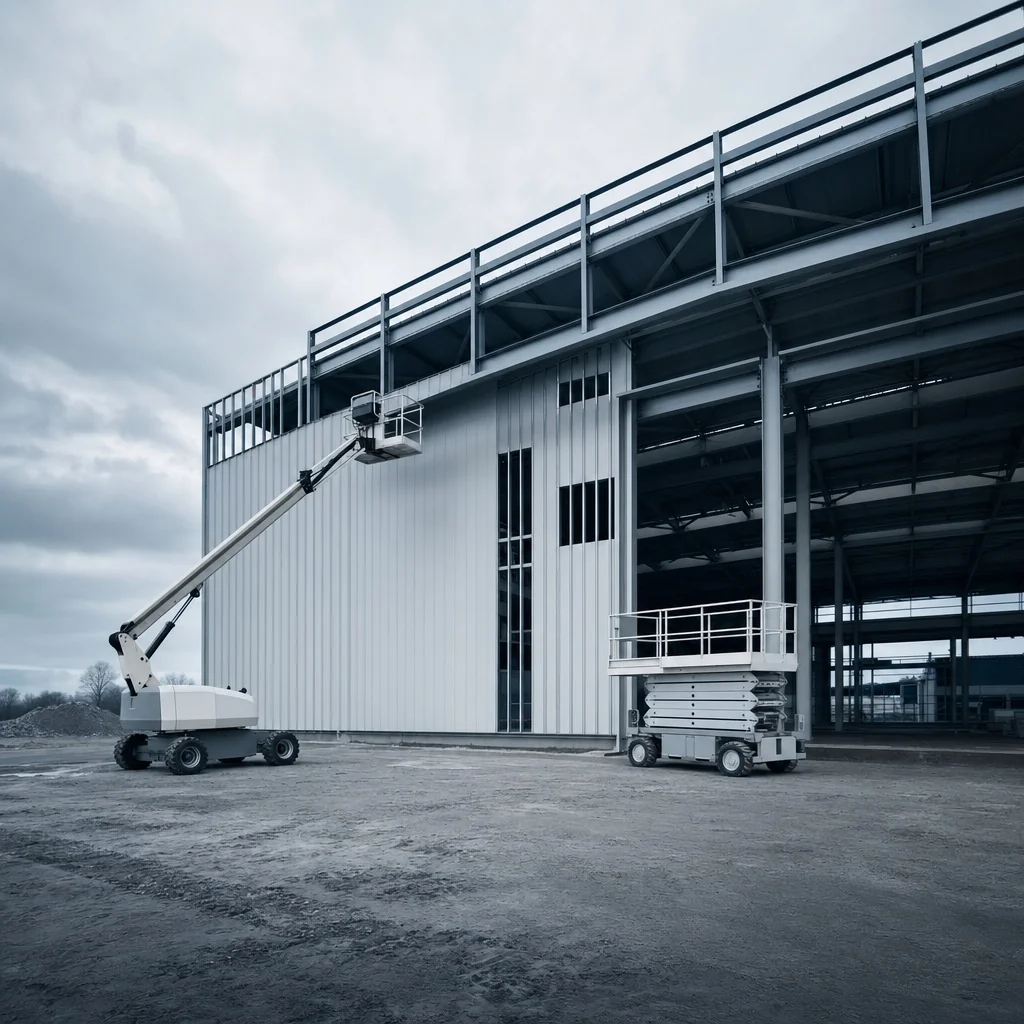
If the platform can’t sit directly under the work because of equipment, canopies, or landscaping, an articulated or telescopic boom may be more practical. Compare options under Aerial Lifts and Boom Lifts for outreach beyond the footprint.
- Explore indoor options: /electric-scissor-lift-rental/
- Compare outdoor units: /rough-terrain-scissor-lift-rental/
- Need side reach? See /aerial-lift-rental/ and /boom-lift-rental/
Call for planning help
For fast guidance on clearances and site conditions in Madison, WI, call (608) 719-3782 or visit the pages above to narrow your specs.