Purpose and exposure
Start with what you need the barrier to do: keep tools secure, steer foot traffic around lab-adjacent areas, or buffer a work zone on a sloped street. Exposure to winter wind, ice, and thaw cycles will influence site-stability factors and spacing. On drumlin-shaped sites, panel lines rarely run perfectly straight; plan for step-downs and corners.
Surface and site-stability planning approach
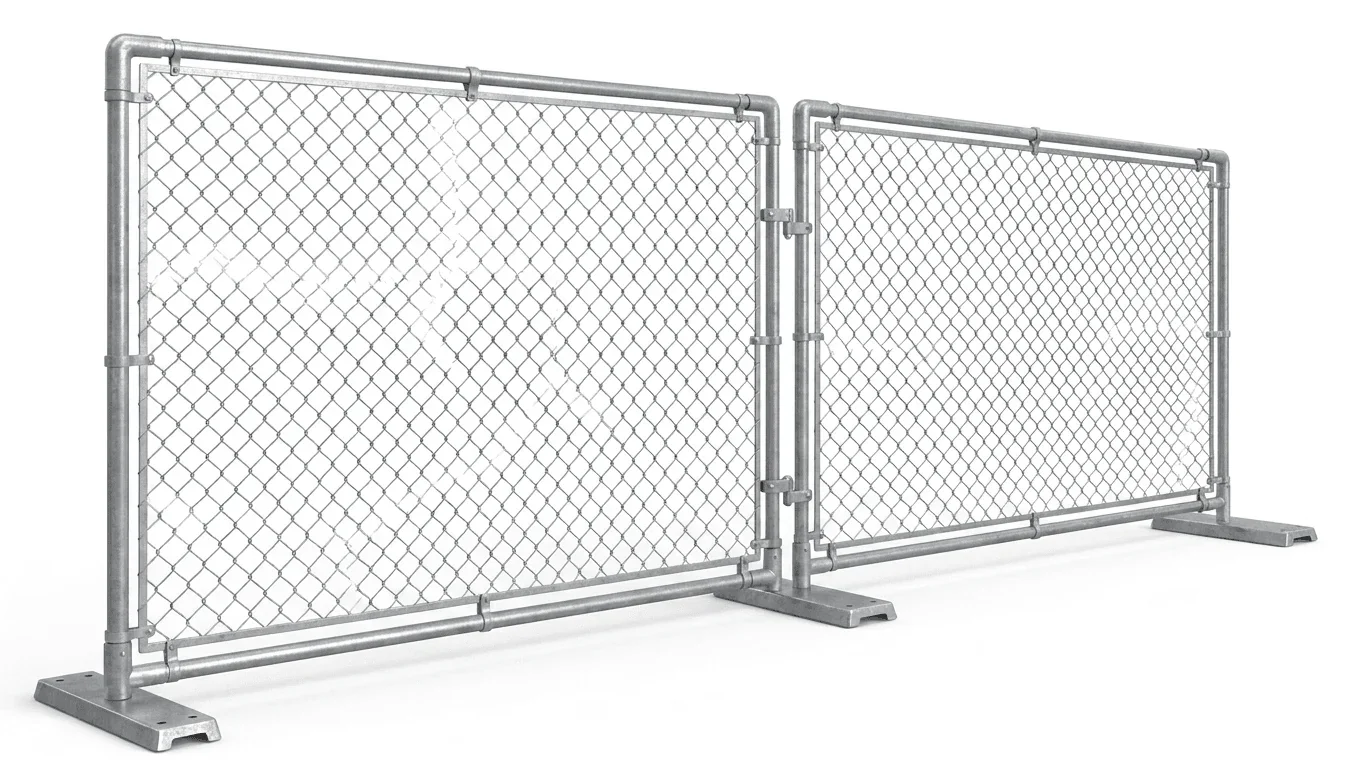
Soft till and uneven gravel lots call for heavier base support or driven posts per site procedures. Where surfaces cannot be penetrated—near sensitive pavements or interiors—freestanding panels with weighted feet and sandbags minimize surface impact. On slopes, stagger bases to avoid concentrated load on one corner.
Access points and clearances
Lay out gates where delivery trucks can stay level while turning. Keep clear of building intakes and emergency routes common near high-tech facilities. If fencing protects an equipment yard with containers, confirm door swing and forklift paths. Night work may require lighting; coordinate with /generators-light-towers-rental/.
Integration with elevated work
When lifts operate inside the perimeter, lane width and turning radii must remain open: - Compact interiors: /electric-scissor-lift-rental/ and /vertical-mast-lift-rental/ - Uneven outdoor grades: /rough-terrain-scissor-lift-rental/ and /articulating-boom-lift-rental/
Weather and maintenance windows
Freeze-thaw cycles loosen site-stability factors and change panel tension. Plan inspection intervals that align with site procedures, especially after storms or rapid temperature swings typical of the regional climate.
Planning checklist
- Purpose: security, separation, or pedestrian flow
- Terrain: slope, step-downs, and soil condition
- site-stability planning: penetrative vs. freestanding
- Gate locations and lane widths
- Coordination with lighting and lift routes