What we cover
- Electric scissor lifts for clean, low-noise indoor work where floor loading, air quality, and tight aisles limit options. See /electric-scissor-lift-rental/.
- Rough-terrain scissor lifts where drumlin slopes, soft soils, or winter surfaces call for wider stance and traction. See /rough-terrain-scissor-lift-rental/.
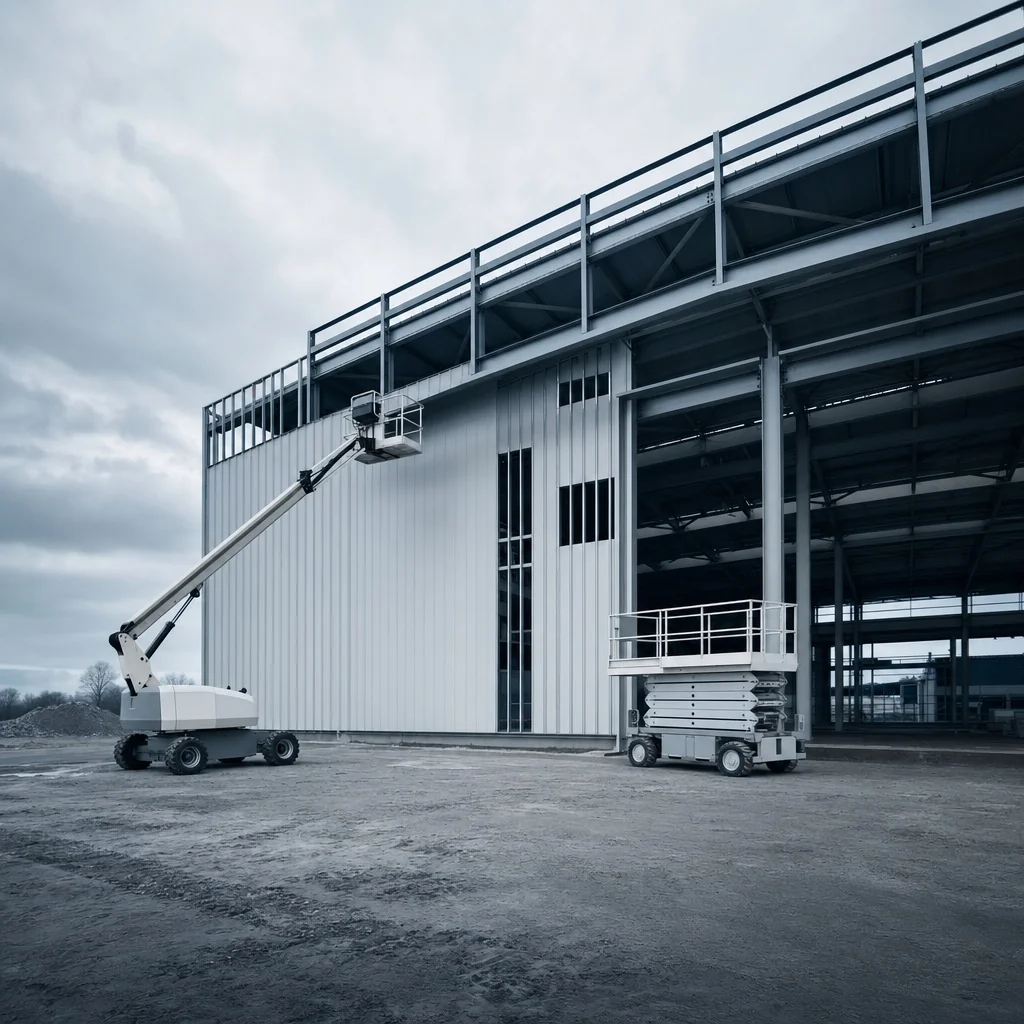
- Boom lifts for work that sits offset from the machine, such as over canopies, process piping, or facade features. See /boom-lift-rental/ and /articulating-boom-lift-rental/.
- Supporting categories—vertical masts, forklifts, telehandlers, and site utilities—when the task needs reach, material handling, or temporary power. Explore /products/.
Why Madison changes the comparison
Indoor maintenance tied to research and technology tenants often prioritizes non-marking tires, electric drive, and compact platforms that fit within service corridors and equipment rooms. Outdoors, rolling grades and seasonally frozen ground push the decision toward rough-terrain ratings, outriggers, and higher ground clearance. Matching those conditions early reduces job resets when a unit cannot sit below the task or steer through the approach path.
How to narrow a lift category here
- Approach geometry: measure distance from a safe parking spot to the work face. If the machine cannot sit directly beneath, consider an articulating boom. See /aerial-lift-rental/.
- Floor and doorway limits: confirm doorway widths, elevator cab sizes, and slab loading before choosing platform width and weight.
- Power and emissions: indoor work near sensitive equipment usually favors electric units; cold outdoor starts may point to diesel or hybrid systems.
- Terrain and weather: slopes, turf, and winter ice influence tire type, gradeability, and the need for stabilization.
How we present information
Each page explains the decision points—access path, working height, outreach, and site conditions—so you can request a model class that aligns with Madison’s mix of indoor labs and uneven outdoor sites. When you are ready to confirm specs or scheduling, reach out through /contact/.