Match equipment to task geometry
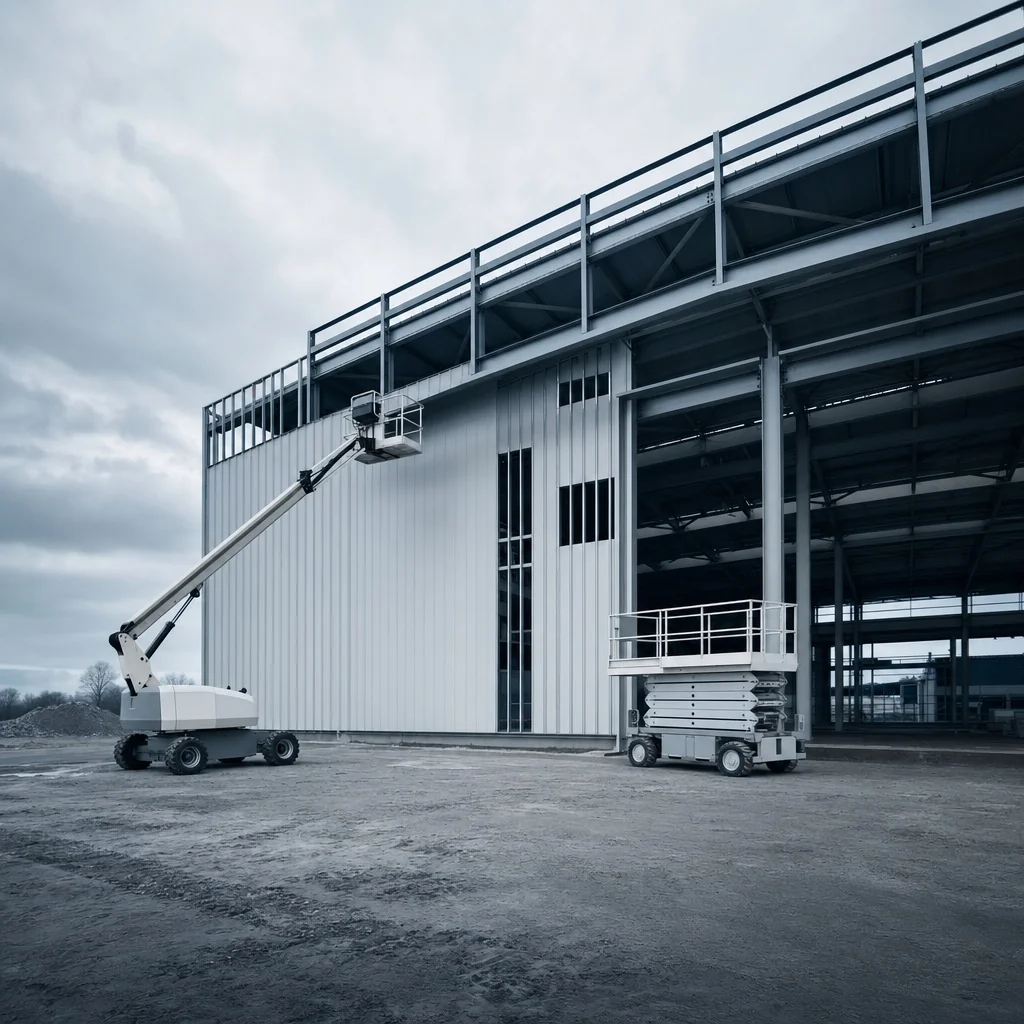
- Straight vertical work under flat ceilings favors scissor platforms sized to aisle width.
- Work set back from the edge or over obstacles needs an articulating or telescopic boom with enough up-and-over or outreach to land the platform where the task sits.
- Material staging to elevated levels may point to /telehandler-rental/ or /forklift-rental/ depending on surface and aisle constraints.
Indoor labs and clean-adjacent areas
Sensitive interiors around local tech and life sciences operations prioritize compact footprints, non-marking tires, and low-emission operation. Compare: - /electric-scissor-lift-rental/ for straight-up tasks in corridors and production rooms - /vertical-mast-lift-rental/ where doorways are tight and turning space is limited
Uneven outdoor terrain
Drumlin slopes and mixed till create off-camber approaches and soft spots. For exterior façades, utilities, and site lighting, look at: - /rough-terrain-scissor-lift-rental/ for broad deck work on firm but uneven ground - /articulating-boom-lift-rental/ where obstacles and elevation changes require precise positioning - /telescopic-boom-lift-rental/ when the platform must reach far from a stable pad
Route and support conditions
Measure the narrowest pinch point, ground bearing, and any grade transitions. Winter freeze-thaw changes traction and pad stability; placement should follow site procedures and the unit’s instructions. For night or extended shifts, plan site support: - /generators-light-towers-rental/ for power and illumination - /storage-containers-rental/ for secure parts and tools near the work area - /temporary-fencing-barricades-rental/ to maintain safe separation around equipment lanes
Key measurements to collect
- Platform height or horizontal reach required
- Maximum machine width and weight allowed on the route
- Slope along approach and at the work pad
- Indoor air and noise restrictions
- Load on platform or forks, including materials and tooling